
posted August 21st, 2012; last edited August 21st, 2012 –– David Sibley

Quiz 49: Estimating numbers of birds

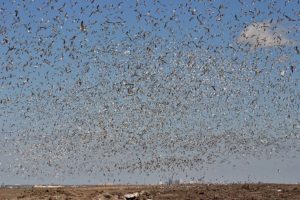
This time the answers are arranged randomly, instead of sequentially, and I think this makes it a little harder, since it’s harder to use the range of possible answers as a clue. Suggestions are always welcome.

….Continue reading Quiz 49: Estimating numbers of birds →

posted August 18th, 2012; last edited August 16th, 2012 –– David Sibley

Distinguishing immature (white) Little Blue Heron from Snowy Egret

These are the only regularly occurring herons that are truly difficult to identify, as immatures of these two species are variable in bare-parts color and distinguishing them can require very careful study. The best clue is foraging posture, which can be seen at any distance and is very reliable. Most individuals are fairly easily separated by leg and bill color, and those differences become more obvious and more reliable over time in late fall and winter. It is perhaps only the youngest immatures in July to September that cause confusion. At least as early as March, the presence of a few new gray body feathers will distinguish most immature Little Blue Herons from the always-white Snowy Egrets.

Determining the age of a white egret can be helpful, since any white adult cannot be a Little Blue Heron, although adult Snowy Egrets have more distinctive bill and leg color than juveniles, and are less likely to cause confusion in the first place. If a bird in late summer or fall shows signs of molt (see my post on aging white egrets), or lacy plumes on the nape or back, then it must be an adult and therefore not a Little Blue Heron.

Habits and foraging posture

Little Blue Heron is a patient stalker, and walks with the neck stretched somewhat awkwardly up and forward, while the bill is pointed down at the water. This posture is distinctive. Generally solitary in shallow water, and shows a preference for grassy or weedy ponds. This species can often be seen quietly working the grassy edges of a pond while numbers of Snowy Egrets forage together in the more open water.

Snowy Egret forages in shallow water up to belly deep, rarely or never in grassy or upland situations. Typically quite active and gregarious, walking or standing with neck either stretched up or coiled, using a variety of techniques to attract or startle fish: striding purposefully through shallow water with the neck partly coiled, running through shallows with wings flapping, following flotillas of Cormorants or mergansers along creeks to catch fish that are flushed out by the diving birds. If water is too deep for standing the egrets will fly low over the surface and attempt to snatch fish from the air. This species will also crouch, with neck coiled ready to strike, and stir the water with one loot, or put the tip of the bill in the water and vibrate it to attract fish. Much of this behavior recalls Reddish Egret or Tricolored Heron, and is never engaged in by Great Egret or Little Blue Heron.

Little Blue Heron vs Snowy Egret

  • habits provide one of the best clues to the identity of foraging birds (see above)

  • wingtips show small dark gray tips on outer primaries (vs all white on Snowy Egret)

    This is variable and the gray tips can be very hard to see (usually invisible when the bird is at rest) but when gray tips can be confirmed they are diagnostic for Little Blue.
  • legs and feet pale, chalky pea-green with feet about the same color as the legs (vs leg color generally brighter lime green with at least some black and with contrasting brighter yellow feet ).

    Some young Snowy Egrets show dull green legs with no black, and even substantial amounts of black (usually on the upper front of the legs) can be difficult to see. Presence of black is diagnostic for Snowy Egret, as is contrasting yellow feet.
  • bill usually paler grayish with less contrasting colors, outer 30–50% of bill dark grayish, entire base of bill pale greenish-gray or fleshy gray, not contrasting much with greenish loral skin (vs bill usually darker, with blackish on culmen extending back close to forehead and pale area at base of bill clean pale gray, contrasting with fairly bright yellow-green loral skin)

    But both species are variable, in particular very young birds. Both species can have the entire base of bill pinkish, yellowish, or gray (more variable in Little Blue), and both species can have contrasting yellowish loral skin (more common and more typical of Snowy Egret). Note that nestling Snowy Egrets have dark gray loral skin and some still show this color briefly after leaving tlie nest. In summary, a mostly blackish culmen is diagnostic for Snowy Egret, any other pattern can be shown by either species.
  • bill shape slightly deeper at base and more tapered, appearing slightly downcurved at times (vs. slightly thinner, more even depth)

    This feature also leads to broader loral skin on Little Blue and more open face with staring expression (vs. narrower loral skin on Snowy Egret with more squinting or frowning expression).
  • Little Blue seems to have a larger eye, broader bare skin on the lores, and maybe a less pronounced eyebrow ridge above the eye; all of which leads to a more wide-eyed, “staring” expression

  • This is a consistent impression, but I haven’t been able to find any objective or measurable difference. Other things like bill thickness, lore color, or head shape may also contribute to the impression, and all can be very similar on young birds. For example, Little Blues average a higher and more rounded crown profile than Snowy, but very young Snowy Egrets also show a rounded crown.
  • Many immature Little Blue Herons show a short pointed plume or two on the back of the head (vs. immature Snowy Egret lacks plumes entirely, although very young birds retain fluffy down at the tips of some head feathers; and adult Snowy Egrets have a bushy tuft of lacy plumes on the back of the head)

posted August 17th, 2012; last edited August 17th, 2012 –– David Sibley

Identification of Waterthrushes

Northern (upper) and Louisiana (lower) Waterthrushes, showing differences in size and plumage. The impression of whiter underparts on Louisiana is partly the result of the very sparsely streaked upper breast, compared to the breastband of many small streaks on Northern. Also notice only two rows of streaks on the flanks of Louisiana, fading out at the rear and leaving a large area of unmarked white on the belly, compared to the many rows of dark streaks on Northern. Original gouache painting copyright David Sibley.

First Glance

A quick judgment of the ground color of the breast and eyebrow stripe will separate most waterthrushes: bright white on Louisiana, yellowish on Northern. A yellowish waterthrush is definitely a Northern, while a whitish bird could be either species. Next look at the shape of the eyebrow stripe, which broadens to the rear on Louisiana, and since it is also bright white on Louisiana this stripe can be very conspicuous (vs tapered behind the eye and usually yellowish on Northern).
….Continue reading Identification of Waterthrushes →

posted August 16th, 2012; last edited August 20th, 2012 –– David Sibley

Quiz 48: Mystery Bird

This bird was photographed in North America, and it’s not some exotic vagrant. ….Continue reading Quiz 48: Mystery Bird →

posted August 15th, 2012; last edited August 20th, 2012 –– David Sibley

Determining the age of white egrets and herons in late summer

A field sketch from South Carolina, showing the differences in feather shapes and patterns between juvenile (left) and adult (right) Great Egret. Original pencil drawing copyright David Sibley.

Identifying the white herons and egrets can be a challenge. We must rely mainly on structure, behavior, and the color of bare parts like bill and legs, because plumage offers very little in the way of field marks. One aspect of plumage can be very helpful, however. By looking at the shape and condition of the feathers, and the patterns created by groups of feathers, it is often possible to distinguish fresh juvenile birds from older individuals, even when the feathers are all white. Knowing the age of a bird is interesting on its own, and it can lead to a more precise assessment of other features, which is helpful for identification.

This distinction relies on the basic fact that adults molt in late summer and show a mixture of old and new feathers – a patchwork of feathers at all stages of growth – while, at the same time, recently-fledged juveniles have pristine plumage with all feathers new and all the same age. The uniformly new plumage of juveniles, combined with small differences in feather shape (usually shorter and narrower on juveniles) can lead to subtle but distinct differences in appearance that will allow you to age many birds.

The sketch and this discussion focuses on birds that are standing, but molting flight feathers are very obvious in flight. This is a reliable and simple clue for age, since juveniles do not molt the primaries and secondaries until they are about a year old. The same pattern of molt timing applies to many other species of birds, so (while this is written specifically about Great Egret) the basic concepts described below can be applied across a broad range of species.

Great Egret: Juveniles vs adults

  • Juveniles in fresh plumage show a very even and smooth “herring-bone” pattern on the neck created by the alignment of thousands of perfectly matched tiny feathers (vs adults usually show signs of molt on neck, with small gaps where feathers are missing; they can show the “herring-bone” pattern but only faintly on the back of the neck.)
  • Juveniles have virtually all of the back and scapular feathers short and rounded, with edges distinct and forming a smooth and regular scaled pattern (vs adults have most of the back feathers longer and tapered to a point, which gives the whole back a silky/hairy texture rather than scaly)
  • Juveniles have all wing coverts neatly aligned and uniform, all the same age with no signs of molt (vs adults show obvious gaps and irregularities in the wing coverts where feathers are worn, damaged, and/or molting)
  • Juveniles lack the very long plumes on the back (vs adults have very long lacy scapular plumes, extending to the tip of the tail and with the tips often stained slightly orange by late summer)

There are no reliable differences in bill color or eye color that help to age Great Egrets, but juveniles do tend to show paler brownish color at the top of the legs (vs blackish on adults)

These are all small and subtle differences, and they require a close view and the right lighting to show feather contours, but together they form an overall impression that is distinctive. Practice by looking for these differences when birds are close, and soon you will be able to distinguish adult and juvenile egrets at greater and greater distances.

posted August 15th, 2012; last edited August 15th, 2012 –– David Sibley

A little-known bird sound

This is a bird sound that I recorded in August in Massachusetts. Listen to the recording and see if you can guess what it is. Some hints are below, and when you’re ready just follow the link for the answer.

click to Read the Answer

Hints
It is a small bird, but larger than a hummingbird.

This species (or its very close relatives) is a common backyard bird across most of the US and Canada.

You might call this a “micro” bird sound.
posted August 14th, 2012; last edited August 20th, 2012 –– David Sibley

Quiz 47 – More estimating numbers

Number sense

Question 1
A
100
B
150
C
200
D
250
E
300
F
350
Question 2
A
20
B
30
C
40
D
50
E
60
F
70
G
80
Question 3
A
75
B
100
C
125
D
150
E
175
F
200
G
225
There are 3 questions to complete.
posted August 11th, 2012; last edited August 20th, 2012 –– David Sibley

Quiz 46 – Estimating numbers

Estimating numbers in flocks of birds is a skill that birders need to practice, but we rarely get a chance to test ourselves. We see a flock, guess the total number, and write it down. We might be off by a large margin, but we’ll never know.

Here is a quiz (and more to come) that will give you a chance to test your accuracy. These are lentils, photographed against a white background, but they simulate birds pretty well, I think.

One estimating technique you can try is to count the “flock” in segments. That is, count ten to see what a group of ten looks like, then superimpose that group across the flock, counting in groups of ten. Or you can just “eyeball” the flock of lentils and take a guess. Good luck, and feel free to offer suggestions or encouragement in the comments.

Test your number sense

Question 1
A
50
Hint:
too low
B
80
Hint:
close, just a little low
C
100
D
120
Hint:
close, just a little high
E
150
Hint:
too high
Question 2
A
45
Hint:
way too low
B
60
Hint:
too low
C
100
D
140
Hint:
a little high
E
180
Hint:
too high
Question 3
A
60
Hint:
too low
B
90
Hint:
too low
C
110
Hint:
a little low
D
150
E
190
Hint:
a little high
There are 3 questions to complete.
posted August 10th, 2012; last edited August 20th, 2012 –– David Sibley

Quiz 45 – Little Brown Bird Identification

Name the species

Question 1
A
Vesper Sparrow
B
Baird's Sparrow
C
Sprague's Pipit
D
Savannah Sparrow
E
Brewer's Sparrow
Question 1 Explanation: 
The streaked breast eliminates Brewer's Sparrow (since it appears to be singing we can assume this is an adult in breeding season, and therefore not a juvenile). Sprague's Pipit can be eliminated by the behavior (singing from a perch in the open), and the thick bill. The three main contenders are Baird's, Savannah, and Vesper Sparrows, and distinguishing those three at this angle is really tough. Baird's should show more tawny-buff color on the face and breast, so it is not the best fit. Savannah should show a little more, darker, and broader streaking on the breast, and usually yellowish lores (which are white on this bird). All of that leaves Vesper Sparrow as the best (and correct) answer. This photo was taken in June 2012 near Choteau MT, copyright David Sibley.
There is 1 question to complete.
posted August 9th, 2012; last edited August 20th, 2012 –– David Sibley

Quiz 44 – Bird flying away

Name the species

Question 1
A
Loggerhead Shrike
B
Eastern Kingbird
C
Lark Sparrow
D
White-winged Dove
E
Lark Bunting
Question 1 Explanation: 
Only Eastern Kingbird has white tips on all of the tail feathers, and all of the other plumage colors confirm that ID - gray rump, white belly, white edges on the secondaries, etc. Photo June 2012, near Choteau, MT, copyright David Sibley.
There is 1 question to complete.